
Najpopularniejsze kategorie
Pozostałe kategorie
Najpopularniejsi autorzy
Bestseller

- Za darmo
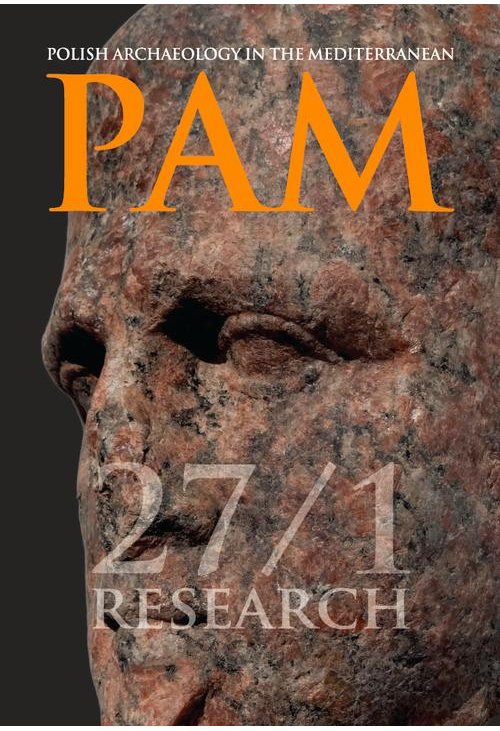
ebook Polish Archaeology in the Mediterranean 27/1 Research
Rok wydania:
2018
W pierwszym fascykule czasopisma PAM 27/1 zainteresowani wynikami najnowszych polskich badań archeologicznych w północno-wschodniej Afryce, basenie Morza Śródziemnego oraz na Bliskim Wschodzie i w Arabii znajdą 23 opracowania dotyczące 17 antycznych stanowisk i programów badań archeologicznych. Tradycyjnie już najliczniejszą reprezentację, o najszerszym zakresie terytorialnym i chronologicznym, mają badania w Egipcie: Aleksandria Kom el-Dikka, Marina el-Alamein, Tell el-Retaba, Tell el-Farkha, Tell el-Murra, Sakkara, Asasif w Tebach Zachodnich, Gebelein i Berenike nad Morzem Czerwonym. W Sudanie są to projekty G.A.S.P. w Ghazali oraz Early Makuria Research Project, pracujący tym razem na cmentarzysku w Tanqasi.
Artykuły dotyczą również nowych stanowisk w Jordanii, czyli rzymskiego i późnoantycznego Khirbat al-Sar/Sara oraz prehistorycznego osadnictwa w regionie al-Tafila, oraz na Półwyspie Arabskim: Qumayrah Ayn w Omanie z okresu neolitu i epoki brązu oraz Saruq al-Hadid w Zjednoczonych Emiratach Arabskich (Emirat Dubaju), przede wszystkim z epoki żelaza. Kolejny sezon badań w fortecy Metsamor w Armenii jest prezentowany obok znalezisk chalkolitycznych z badań powierzchniowych projektu UGZAR w irackim Kurdystanie. Inne polskie prace archeologiczne i konserwatorskie omówione są pokrótce w kronice na początku fascykułu.
Część poświęcona studiom badawczym zawiera cztery artykuły. Archeometryczne studium ceramicznych materiałów budowlanych z rzymskich fortów garnizonowych w Kolchidzie na wybrzeżu Morza Czarnego obejmuje archeoceramologiczną analizę Małgorzaty Daszkiewicz połączoną z archeologicznym komentarzem współautorów Radosława Karasiewicza-Szczypiorskiego, Shoty Mamuladzego i Lashy Aslanischvili.
Drugi artykuł to wnikliwe opracowanie Elżbiety Jastrzębowskiej, opatrzone katalogiem fragmentów malowanych tynków odkrytych trzydzieści lat temu w Domu Aiona w Nea Pafos na Cyprze. Autorka omawia repertuar dekoracji, proponując nowe identyfikacje Muz przedstawionych na malowidłach w oparciu o paralele z późnorzymskiego malarstwa i mozaik. Włodzimierz Godlewski rekonstruuje na podstawie źródeł archeologicznych oraz opublikowanych źródeł epigraficznych historię Kościoła Makurii od połowy VI po wczesny XII w. n.e. W drugim swoim tekście włączonym do rocznika Godlewski podsumowuje archeologiczne i architektoniczne dowody na zachodzące w XIII–XVIII w. zmiany społeczne w Dongoli.
For readers interested in the most recent Polish archaeological discoveries in northeastern Africa, the Eastern Mediterranean and the Near East and Arabia, the PAM 27/1 volume brings 23 texts from 17 archaeological sites and excavation programs. Egypt is traditionally the best represented with projects from all periods and parts of the country: Alexandria Kom el-Dikka, Marina el-Alamein, Tell el-Retaba, Tell el-Farkha, Tell el-Murra, Saqqara, Asasif in West Thebes, Gebelein and Berenike on the Red Sea. In Sudan, the G.A.S.P. project at Ghazali and the Early Makuria Research Project, this time working at Tanqasi, present their findings. Articles concern also new sites in Jordan: the Roman and late antique Khirbat al-Sar/Sara and prehistoric sites in the al-Tafila region, and in the Arabian Peninsula: prehistoric and Bronze Age Qumayrah Ayn in Oman and Iron Age Saruq al-Hadid in the United Arab Emirates (Emirate of Dubai). The ongoing project at the fortress site of Metsamor in Armenia reports on another season of finds and the Chalcolithic section of the UGZAR survey in Iraqi Kurdistan discusses the latest results. Other Polish work is reviewed briefly in a chronicle at the beginning of the volume.
The growing STUDIES section includes four papers. First is an archaeometric study of ceramic building material from the Roman forts on the Colchis coast with Daszkiewicz providing an archaeoceramological analysis of the finds discussed from an archaeological point of view by co-authors Karasiewicz-Szczypiorski, Mamuladze and Aslanischvili. In the second paper, Jastrzębowska revisits a collection of wall painting fragments from the House of Aion in Nea Paphos on Cyprus, discovered some 30 years ago. In a meticulous study, she catalogs the fragments and reconstructs the mutual relations between the figural representations of the Muses, some of which she re-identifies based on parallels from late antique wall painting and mosaics. Two papers by Godlewski reflect his long-time research at Dongola in Sudan. In the first paper, he presents a short history of the Church of Makuria from the mid-6th to the early 12th century. His second article reviews the archaeological and architectural evidence for social change in 13th–17th-century Dongola.
Artykuły dotyczą również nowych stanowisk w Jordanii, czyli rzymskiego i późnoantycznego Khirbat al-Sar/Sara oraz prehistorycznego osadnictwa w regionie al-Tafila, oraz na Półwyspie Arabskim: Qumayrah Ayn w Omanie z okresu neolitu i epoki brązu oraz Saruq al-Hadid w Zjednoczonych Emiratach Arabskich (Emirat Dubaju), przede wszystkim z epoki żelaza. Kolejny sezon badań w fortecy Metsamor w Armenii jest prezentowany obok znalezisk chalkolitycznych z badań powierzchniowych projektu UGZAR w irackim Kurdystanie. Inne polskie prace archeologiczne i konserwatorskie omówione są pokrótce w kronice na początku fascykułu.
Część poświęcona studiom badawczym zawiera cztery artykuły. Archeometryczne studium ceramicznych materiałów budowlanych z rzymskich fortów garnizonowych w Kolchidzie na wybrzeżu Morza Czarnego obejmuje archeoceramologiczną analizę Małgorzaty Daszkiewicz połączoną z archeologicznym komentarzem współautorów Radosława Karasiewicza-Szczypiorskiego, Shoty Mamuladzego i Lashy Aslanischvili.
Drugi artykuł to wnikliwe opracowanie Elżbiety Jastrzębowskiej, opatrzone katalogiem fragmentów malowanych tynków odkrytych trzydzieści lat temu w Domu Aiona w Nea Pafos na Cyprze. Autorka omawia repertuar dekoracji, proponując nowe identyfikacje Muz przedstawionych na malowidłach w oparciu o paralele z późnorzymskiego malarstwa i mozaik. Włodzimierz Godlewski rekonstruuje na podstawie źródeł archeologicznych oraz opublikowanych źródeł epigraficznych historię Kościoła Makurii od połowy VI po wczesny XII w. n.e. W drugim swoim tekście włączonym do rocznika Godlewski podsumowuje archeologiczne i architektoniczne dowody na zachodzące w XIII–XVIII w. zmiany społeczne w Dongoli.
For readers interested in the most recent Polish archaeological discoveries in northeastern Africa, the Eastern Mediterranean and the Near East and Arabia, the PAM 27/1 volume brings 23 texts from 17 archaeological sites and excavation programs. Egypt is traditionally the best represented with projects from all periods and parts of the country: Alexandria Kom el-Dikka, Marina el-Alamein, Tell el-Retaba, Tell el-Farkha, Tell el-Murra, Saqqara, Asasif in West Thebes, Gebelein and Berenike on the Red Sea. In Sudan, the G.A.S.P. project at Ghazali and the Early Makuria Research Project, this time working at Tanqasi, present their findings. Articles concern also new sites in Jordan: the Roman and late antique Khirbat al-Sar/Sara and prehistoric sites in the al-Tafila region, and in the Arabian Peninsula: prehistoric and Bronze Age Qumayrah Ayn in Oman and Iron Age Saruq al-Hadid in the United Arab Emirates (Emirate of Dubai). The ongoing project at the fortress site of Metsamor in Armenia reports on another season of finds and the Chalcolithic section of the UGZAR survey in Iraqi Kurdistan discusses the latest results. Other Polish work is reviewed briefly in a chronicle at the beginning of the volume.
The growing STUDIES section includes four papers. First is an archaeometric study of ceramic building material from the Roman forts on the Colchis coast with Daszkiewicz providing an archaeoceramological analysis of the finds discussed from an archaeological point of view by co-authors Karasiewicz-Szczypiorski, Mamuladze and Aslanischvili. In the second paper, Jastrzębowska revisits a collection of wall painting fragments from the House of Aion in Nea Paphos on Cyprus, discovered some 30 years ago. In a meticulous study, she catalogs the fragments and reconstructs the mutual relations between the figural representations of the Muses, some of which she re-identifies based on parallels from late antique wall painting and mosaics. Two papers by Godlewski reflect his long-time research at Dongola in Sudan. In the first paper, he presents a short history of the Church of Makuria from the mid-6th to the early 12th century. His second article reviews the archaeological and architectural evidence for social change in 13th–17th-century Dongola.
Spis treści ebooka Polish Archaeology in the Mediterranean 27/1
PCMA partners 9Abbreviations 11
FIeldwork Polish research in 2017 15
Egypt
Alexandria
Alexandria Kom el-Dikka. Season 2017 Grzegorz Majcherek 35
Marina el-Alamein
Marina el Alamein: newly discovered bath after the 2017 season Krzysztof Jakubiak 57
Research and architectural conservation in Marina el-Alamein in 2017 (Polish–Egyptian Conservation Mission)
Rafał Czerner, Grażyna Bąkowska-Czerner, and Wiesław Grzegorek 67
Conservation in Marina el-Alamein in 2017 (Polish–Egyptian Conservation Mission) Piotr Zambrzycki and Anna Selerowicz 85
Tell el-Retaba
Tell el-Retaba: season 2017 Jozef Hudec, Łukasz Jarmużek, Lucia Hulková, Emil Fulajtár, Veronika Dubcová, Sławomir Rzepka, and Agnieszka Ryś 93
Tell el-farkha
Tell el-Farkha: archaeological fieldwork 2016–2017
Marek Chłodnicki and Krzysztof M. Ciałowicz 123
Tell el-Murra
Tell el-Murra (Northeastern Nile Delta Survey): research in 2016–2017 Mariusz A. Jucha, Grzegorz Bąk-Pryc, Natalia Małecka-Drozd and Magdalena Kazimierczak 149
Saqqara
Saqqara: season 2017 Kamil O. Kuraszkiewicz 169
with appendix by Iwona Ciszewska-Woźniak
West Thebes: Asasif
Middle Kingdom tombs of Asasif: archaeological fieldwork in 2017 Patryk Chudzik 183
Human remains from Tomb MMA 514 in North Asasif:
preliminary assessment Roselyn A. Campbell 195
Berenike
Beads and pendants from the Hellenistic to early Byzantine Red Sea port of Berenike, Egypt: Seasons 2014 and 2015 Joanna Then-Obłuska 203
Gebelein
Gebelein Archaeological Project 2018: temple and fortress area on the Eastern Mountain Wojciech Ejsmond, Dawid F. Wieczorek, and Alicja Wieczorek 235
Sudan
Ghazali
Qatar–Sudan Archaeological Project: Excavations at the Ghazali monastery from 2014 to 2016 Artur Obłuski, Joanna Ciesielska, Robert Stark, Adrian Chlebowski,
Aleksander Misiurny, Maciej Żelechowski-Stoń,
and Zaki el-Din Mahmoud 245
El-Zuma
Early Makuria Research Project. Excavations at Tanqasi: first season in 2018 Maciej Wyżgoł and Mahmoud El-Tayeb 273
Early Makuria Research Project. The vessel assemblage from Tanqasi Ewa Czyżewska-Zalewska 289
Early Makuria Research Project. Beads and pendants from the tumulus cemetery in Nubian Tanqasi, Sudan Joanna Then-Obłuska 303
Early Makuria Research Projet. Metal artifacts from the Tanqasi cemetery Łukasz Zieliński 317
Jordan
Khirbat al-Sar (Sara)
Archaeological and geophysical survey at the site of Khirbat as-Sar (Sara), Jordan Jolanta Młynarczyk and Mariusz Burdajewicz 341 with appendices by Jolanta Młynarczyk, Robert Ryndziewicz, and Julia Burdajewicz
AL -TA FILA
HLC Project 2017: Jagiellonian University excavations in southern Jordan Piotr Kołodziejczyk, Marek Nowak, Michał Wasilewski, Barbara Witkowska, Jacek Karmowski, Marcin Czarnowicz, Agnieszka Brzeska-Zastawna, Justyna Zakrzeńska, Katarzyna Radziwiłko, and Julia Kościuk 379
IRAQ I KURD ISTAN
Newcomers and autochtons. The 2016–2017 UGZAR survey
in the Kurdistan Autonomous Region, Iraq. Settlement pattern in the Ninevite 5 period (2012–2017) Dorota Ławecka 417
Armenia
Metsamor
Metsamor (Armenia) after five seasons of excavations
Krzysztof Jakubiak, Ashot Piliposyan, Mateusz Iskra,
and Artavazd Zakyan 429
Oman
QU MAYRAH
Second season of prehistoric investigations in the Qumayrah Valley, Oman Marcin Białowarczuk and Agnieszka Szymczak 445
UAE
SARUQ AL -HAD ID
Conservation of metal artifacts from the Polish Mission
excavation at Saruq al-Hadid (UAE) Łukasz Zieliński and Władysław Weker 465
STUD IES
Ceramic building material from the Roman forts on the Colchis coast: archaeology and archaeoceramological analysis Radosław Karasiewicz-Szczypiorski, Shota Mamuladze, Lasha Aslanishvili and Małgorzata Daszkiewicz 485
Wall paintings from the House of Aion in Nea Paphos
Elżbieta Jastrzębowska 527
Short history of the Church of Makuria (mid 6th–early 12th century) Włodzimierz Godlewski 599
Archaeological and architectural evidence of social change in 13th–17th century Dongola Włodzimierz Godlewski 617
Szczegóły ebooka Polish Archaeology in the Mediterranean 27/1
- Wydawca:
- Wydawnictwa Uniwersytetu Warszawskiego
- Rok wydania:
- 2018
- Typ publikacji:
- Ebook
- Język:
- angielski
- Format:
- Redakcja:
- Zych Iwona
- Liczba stron:
- 648
- Miejsce wydania:
- Warszawa
Recenzje ebooka Polish Archaeology in the Mediterranean 27/1
-
Reviews (0)

Na jakich urządzeniach mogę czytać ebooki?
 Na czytnikach Kindle, PocketBook, Kobo i innych
 Na komputerach stacjonarnych i laptopach
 Na telefonach z systemem ANDROID lub iOS
 Na wszystkich urządzeniach obsługujących format plików PDF, Mobi, EPub
- Za darmo
0,00 zł



@CUSTOMER_NAME@
@COMMENT_TITLE@
@COMMENT_COMMENT@