Koszyk

Twój koszyk jest pusty

Dodaj ebooki i audiobooki, które chcesz kupić.

Przeglądaj ofertę
  • Ebooki
  • Audiobooki
  • Nowości
  • Przedsprzedaż
  • Bestsellery
  • Promocje
  • Za darmo
  • Autorzy
  • Blog
  • Publikuj z nami
  • Kontakt

Pytanie o zamówienie albo plik? Napisz na kontakt@bezkartek.com

Ebooki i audiobooki bez czekania. Link do pobrania przychodzi na e-mail chwilę po zakupie.

Katalog

  • Ebooki
  • Audiobooki
  • E-prasa
  • Nowości
  • Przedsprzedaż
  • Bestsellery
  • Promocje
  • Darmowe ebooki
  • Autorzy

Ebooki

  • Beletrystyka
  • Kryminał, sensacja i thriller
  • Fantastyka, science fiction i horror
  • Romans i erotyka
  • Dla dzieci i młodzieży
  • Biografie, reportaż i publicystyka
  • Wszystkie ebooki

Audiobooki

  • Beletrystyka
  • Kryminał, sensacja i thriller
  • Fantastyka, science fiction i horror
  • Romans i erotyka
  • Dla dzieci i młodzieży
  • Biografie, reportaż i publicystyka
  • Wszystkie audiobooki

Twoje konto

  • Moja półka
  • Zamówienia
  • Ulubione
  • Koszyk

Pomoc

  • Najczęstsze pytania
  • Kontakt
  • Blog
  • Publikuj z nami
  • Regulamin
  • Polityka prywatności
  • Polityka cookies
BezKartek
© 2026 BezKartek. Wszelkie prawa zastrzeżone.Płatności: BLIK, Przelewy24, karty
  1. Strona główna
  2. ›Ebooki
  3. ›Nauki humanistyczne
  4. ›Językoznawstwo
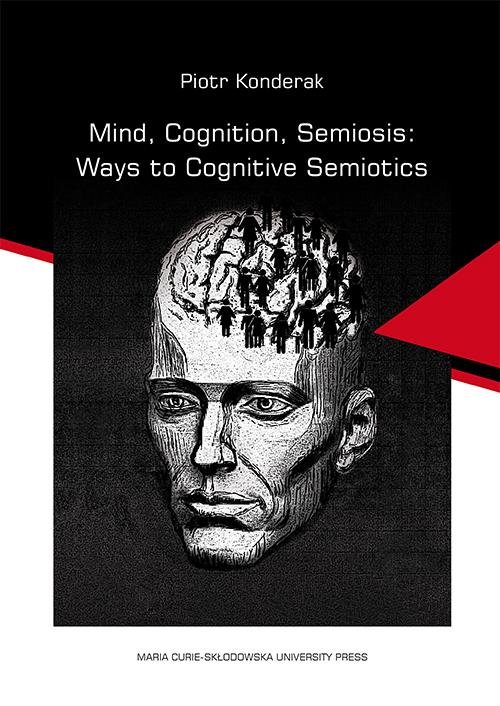
  5. ›Mind, Cognition, Semiosis: Ways to Cognitive Semiotics

E-book, Piotr Konderak

Mind, Cognition, Semiosis: Ways to Cognitive Semiotics

Mind, Cognition, Semiosis: Ways to Cognitive Semiotics — Piotr Konderak

What is meaning-making? How do new domains of meanings emerge in the course of child’s development? What is the role of consciousness in this process? What is the difference between making sense of pointing, pantomime and language utterances?

Czytaj cały opis
  • Językoznawstwo
32,51 zł

Cena okładkowa: 37,80 złCena detaliczna sugerowana przez wydawcę. To nie jest nasza wcześniejsza cena.

Format
pdf
Liczba stron
320
Dostawa
e-mail, od razu po płatności
What is meaning-making? How do new domains of meanings emerge in the course of child’s development? What is the role of consciousness in this process? What is the difference between making sense of pointing, pantomime and language utterances? Are great apes capable of meaning-making? What about dogs? Parrots? Can we, in any way, relate their functioning and behavior to a child’s? Are artificial systems capable of meaning-making? The above questions motivated the emergence of cognitive semiotics as a discipline devoted to theoretical and empirical studies of meaning-making processes. As a transdisciplinary approach to meaning and meaning-making, cognitive semiotics necessarily draws on a different disciplines: starting with philosophy of mind, via semiotics and linguistics, cognitive science(s), neuroanthropology, developmental and evolutionary psychology, comparative studies, and ending with robotics. The book presents extensively this discipline. It is a very eclectic story: highly abstract problems of philosophy of mind are discussed and, simultaneously, results of very specific experiments on picture recognition are presented. On the one hand, intentional acts involved in semiotic activity are elaborated; on the other, a computational system capable of a limited interpretation of excerpts from Carroll’s Through the Looking-Glass is described. Specifically, the two roads to cognitive semiotics are explored in the book: phenomenological-enactive path developed by the so-called Lund school and author’s own proposal: a functional-cognitivist path.
Format
pdf
Wydawnictwo
UMCS
Liczba stron
320
Język
pl
ISBN
9788322790854
Data wydania
2021-07-16
Introduction: How to Approach Meaning? 9 Acknowledgements 17 Part I. Cognitive Semiotics: The Basics 19 Chapter 1. Introducing Cognitive Semiotics 21 1.1 The beginnings 21 1.2 Extension of the term “semiotics” 24 1.3 Methodology of cognitive semiotics 26 1.4 Transdisciplinarity 29 1.5 Phenomenological contributions 30 1.6 “Third stage” of cognitive science 31 1.7 Key research interests 32 1.7.1 Metatheoretical considerations 32 1.7.2 Semiotic development and evolution 33 1.7.3 Multimodality and gestures 37 1.8 Cognitive semiotics and cognitivism 38 Chapter 2. The Semiotic Hierarchy Framework 41 2.1 Meaning theory – initial remarks 41 2.2 The Semiotic Hierarchy as a theory of meaning 43 2.2.1 Level 1: Life 43 2.2.2 Level 2: Consciousness 45 2.2.3 Between life and consciousness: the first transition 46 2.2.4 Level 3: Signs 48 2.2.5 Between consciousness and signs: the second transition 49 2.2.6 Level 4: Language 50 2.2.7 From signs to language: the third transition 52 2.3 The Semiotic Hierarchy: some objections 54 Part II. Minds and Meanings 61 Chapter 3. “Analytic” Philosophy of Mind 63 3.1 The Cartesian heritage 63 3.2 Meaningful behavior 66 3.2.1 Behaviorism and cognitive semiotics: mind, body, behavior 70 3.2.2 Problem of other minds 70 3.2.3 First-person knowledge 71 3.3 Reduction to the neural: meaning in the brain 72 3.3.1 Phenomenological fallacy and other problems 73 3.4 Meaning and function 75 3.4.1 On the way to functionalism: causal profiles 75 3.4.2 Mind and function 76 3.4.3 Qualia 79 3.4.4 The representational theory of mind 80 3.4.5 Functionalism extended 82 3.4.6 Functionalism and cognitive semiotics 84 3.4.7 Extended mind and meaning-making 86 3.5 Consciousness, functionally understood 87 3.6 The subjective mind 90 Chapter 4. The Phenomenological Mind and Meaning-Making 93 4.1 How should phenomenology be approached? 93 4.2 Intentionality 95 4.2.1 Perception 97 4.2.2 Remembering 101 4.2.3 Imagination and anticipation 103 4.2.4 Signitive intentions 103 4.2.5 Pictorial intention 105 4.2.6 Indicational intentions 106 4.2.7 Categorial intentions 107 4.2.8 Types of intentionality and the Semiotic Hierarchy 109 4.3 So where are meanings? 109 4.4 The phenomenological method 111 4.5 Lifeworld 115 4.6 Intersubjectivity 116 4.7 Embodiment 119 4.8 A way to science 120 4.9 Phenomenology applied 122 4.9.1 Neurophenomenology 122 4.9.2 Front-loading phenomenology 124 4.9.3 A note on heterophenomenology 126 4.10 Summary: taking phenomenology seriously 127 Part III. Cognition 133 Chapter 5. Cognitivist Approach to Cognition 135 5.1 “Cognitivism” or standard cognitive science 135 5.2 Symbolic approach: the three basic ideas 136 5.2.1 Limitations: magical number 7 137 5.2.2 The generative approach to language 138 5.2.3 TOTE: organization of behavior and behind behavior 140 5.2.4 Cognitivism in a nutshell: perception 141 5.3 Connectionist approaches 143 5.3.1 Overview of the architecture 144 5.3.2 Connectionist representations 145 5.3.3 Manipulations on representations 147 5.4 Representations revisited 148 5.5 What cognitive science is supposed not to be 149 5.6 Standard cognitive science and meaning-making 151 5.7 Cognitivism – summary 153 5.8 Departure from cognitivism: dynamical systems 154 5.8.1 Dynamical systems – applications 156 Chapter 6. Beyond Cognitivism? 159 6.1 Problems with cognitivism 159 6.2 The enactive approach: cognition as interaction 160 6.2.1 Meaning-making in perception I: Gibson’s ecological psychology 163 6.2.2 Meaning-making in perception II: “skillful bodily activity” 167 6.2.3 Experiences 169 6.2.4 Foundations of meaning: autonomy and sense-making 170 6.2.5 Consciousness and phenomenology 172 6.2.6 Radical enactivism: Hutto and Myin 173 6.2.7 Enactivism in cognitive semiotics 175 6.3 Embodied cognition 175 6.3.1 The two approaches to embodiment 178 6.3.2 Embodiment in practice 179 6.3.3 How to overcome the limitations? 181 6.3.4 Six faces of embodiment 183 6.3.5 Summarizing embodiment 184 6.4 Extended cognition 185 6.4.1 Constitution and the cognitive 186 6.4.2 What is a cognitive system? 187 6.5 The embedded mind: a short note 190 6.6 4e+a (or rather 2e+a) 191 6.7 Representations 196 6.7.1 Representations and cognitive semiotics 199 6.8 Summary: cognitive science, cognitive sciences 200 Part IV. Semiosis 207 Chapter 7. Towards a Semiotics for Cognitive Semiotics 209 7.1 Semiotics, sign, semiosis 209 7.2 What is a sign: The Stoics 210 7.2.1 Kinds of signs 210 7.2.2 Sign, proposition and conditional 211 7.2.3 Signs and language 212 7.2.4 “Reading the world”: semeia and cognitive semiotics 213 7.3 Peircean semiotics 214 7.3.1 Signs and cognition 215 7.3.2 Sign, the definition(s) 217 7.3.3 Peircean semiosis as meaning-making 221 7.3.4 The second trichotomy 222 7.3.5 Meanings beyond signs 225 7.3.6 Peircean cognitive semiotics 226 7.4 Semiotics for cognitive semiotics: Sonesson 227 7.4.1 Perceptual meaning 227 7.4.2 Sonesson’s notion of a sign 228 7.4.3 Phenomenology and semiotics 231 7.5 Semiotics and empirical studies 234 7.5.1 Emergence of sign function empirically addressed 235 7.5.2 Semiotics for cognitive semiotics: applications 237 7.5.2.1 Study I: understanding iconicity 238 7.5.2.2 Study II: the role of semiotic vehicles in communication 239 7.6 In sum: the conceptual-empirical spiral 241 Chapter 8. Cognitivism: Modeling Semiosis 243 8.1 Back to cognitivism: a method 243 8.1.1 Cognitive architectures 244 8.1.2 Cognitive modeling: an example application 246 8.1.3 Cognitive (computational) modeling 248 8.2 Cognitive modeling of semiosis 250 8.2.1 What is modeled: semiotic systems 251 8.2.2 Approaches to semiosis 253 8.2.3 Cognitive architecture for semiosis: GLAiR & snarpy 255 8.2.4 Semiosis implemented 257 8.2.5 Further observations 266 8.2.6 Re-interpretation 271 8.2.7 Using a sign as a sign 273 8.3 Summary: cognitive modeling of meaning-making 275 Concluding Remarks: Ways to Cognitive Semiotics Reconsidered 277 Common starting point 277 Complications on the road 279 The forking of paths 281 On the cognitivist path 281 Back on the common road? 283 What’s on the horizon 283 Cognitivism on the horizon 285 The last signpost on the road 286 References 287 Index of Names 309 Index of Subjects 313

Nikt jeszcze nie ocenił tego tytułu. Twoja recenzja może być pierwsza.

Może Cię zainteresować

Podobne tytuły

Ładowanie propozycji…

Ten sam autor

Piotr Konderak

Ładowanie propozycji…

Twoja historia

Ostatnio oglądane

Ładowanie propozycji…

Może Cię zainteresować

Podobne tytuły

Więcej: Językoznawstwo
Spacer po dawnym Lublinie. Podręcznik do nauczania rozumienia ze słuchu dla Polonii i cudzoziemców — Mariusz Ausz, Anna Trębska-Kerntopf, Piotr NowakNowośćwydana 20 października

E-book

Spacer po dawnym Lublinie. Podręcznik do nauczania rozumienia ze słuchu dla Polonii i cudzoziemców

Mariusz Ausz, Anna Trębska-Kerntopf, Piotr Nowak

79,12 zł
Podmiotowość ujęzykowiona w tekstach historii mówionej — Damian GocółNowośćwydana 31 sierpnia

E-book

Podmiotowość ujęzykowiona w tekstach historii mówionej

Damian Gocół

28,38 zł
Leksykon aksjologiczny Słowian i ich sąsiadów t. 8: Zdrowie, red. nacz. † Jerzy BartmińskiNowośćwydana 26 sierpnia

E-book

Leksykon aksjologiczny Słowian i ich sąsiadów t. 8: Zdrowie, red. nacz. † Jerzy Bartmiński
45,58 zł
Rozumienie wypowiedzi mówionych i pisanych w afazji — Kamila Bigos

E-book

Rozumienie wypowiedzi mówionych i pisanych w afazji

Kamila Bigos

31,82 zł
Stereotypy – symbole – wartości w językowym obrazie świata — Stanisława Niebrzegowska-Bartmińska

E-book

Stereotypy – symbole – wartości w językowym obrazie świata

Stanisława Niebrzegowska-Bartmińska

28,38 zł
Kompetencja językowa dzieci z ADHD — Elżbieta Szabelska

E-book

Kompetencja językowa dzieci z ADHD

Elżbieta Szabelska

24,08 zł
Polska kuchnia niepolska. Kulinarne eksperymenty i kuchenne opowieści — Agnieszka Tambor, Jolanta Tambor, Magdalena KnapikNowośćwydana 19 listopada

E-book

Polska kuchnia niepolska. Kulinarne eksperymenty i kuchenne opowieści

Agnieszka Tambor, Jolanta Tambor, Magdalena Knapik

38,61 zł
Chochliki, wdowy i sieroty — Rebecca LeeNowośćwydana 18 listopada

E-book

Chochliki, wdowy i sieroty

Rebecca Lee

50,74 zł
Kibicowska mowa pogardy — Katarzyna BurskaNowośćwydana 17 listopadaZa darmo

E-book

Kibicowska mowa pogardy

Katarzyna Burska

Za darmo
Business English Magazine 116Nowośćwydana 27 października

E-book

Business English Magazine 116
28,97 zł
Espanol Si gracias 78 — Colorful MediaNowośćwydana 27 października

E-book

Espanol Si gracias 78

Colorful Media

19,01 zł
Espanol Si gracias 77 — Colorful MediaNowośćwydana 27 października

E-book

Espanol Si gracias 77

Colorful Media

19,01 zł
English Matters 121Nowośćwydana 19 października

E-book

English Matters 121
19,01 zł
Literatura od podszewki. Teorie pisania — Michał RusinekNowośćwydana 15 października

E-book

Literatura od podszewki. Teorie pisania

Michał Rusinek

52,19 zł
Język służb bezpieczeństwa Polskiej Rzeczpospolitej Ludowej i Ludowej Republiki Bułgarii (na podstawie analizy dokumentów archiwalnych dotyczących inwigilacji środowiska inteligenckiego) — Julia Mazurkiewicz-SułkowskaNowośćwydana 12 październikaZa darmo

E-book

Język służb bezpieczeństwa Polskiej Rzeczpospolitej Ludowej i Ludowej Republiki Bułgarii (na podstawie analizy dokumentów archiwalnych dotyczących inwigilacji środowiska inteligenckiego)

Julia Mazurkiewicz-Sułkowska

Za darmo
Dylematy sprawiedliwości — Jan Skarbek-KazaneckiNowośćwydana 30 września

E-book

Dylematy sprawiedliwości

Jan Skarbek-Kazanecki

34,36 zł