
Najpopularniejsze kategorie
Pozostałe kategorie
Najpopularniejsi autorzy
Bestseller

- Za darmo
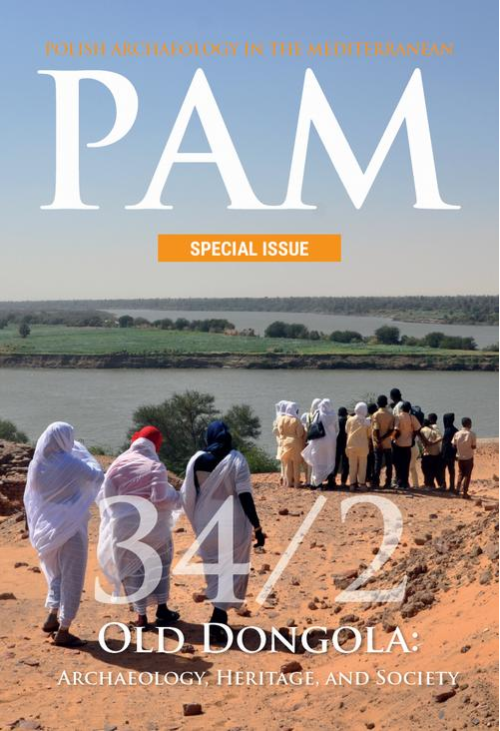
ebook Polish Archaeology in the Mediterranean 34/2 Special Issue. Old Dongola: Archaeology, Heritage, and Society
Rok wydania:
2025
Academic journal on the archaeology of ancient civilizations of the Eastern Mediterranean, including the Near East and northeastern Africa, from the Stone and Bronze Ages in the Near East to the rise of Islam in Africa in the 17th century, presenting new research on recent field discoveries, revisited old fieldwork and thematic in-depth studies on selected issues of interest to the archaeological community at large. Moreover, papers on new documentation methodologies in field archaeology, conservation studies, and archaeological heritage management related to the subjects covered in the journal.
\'Polish Archaeology in the Mediterranean\' (PAM) is an open-access, peer-reviewed journal of over 30 years’ standing (the first issue appeared in 1990). The journal scope corresponds to its role as an academic journal associated with the Polish Centre of Mediterranean Archaeology. Currently, the annual issue usually consists of a thematic fascicle and a fascicle containing miscellaneous studies within the journal’s scope.
From the start in 1990, it has presented, in English, the Polish contribution to Mediterranean archaeology, priding itself on bringing out current reports within a year or two of the fieldwork. Today it is all that and more. The PAM journal strives to be at the nexus of what was traditionally its mission — publishing the results of primary research in the field of archaeology and the related sciences—and a new approach designed to contextualize new and old research within world studies in the field. The latter comes in the form of thematic special volumes, co-edited by guest editors, international specialists in their respective fields.
\'Polish Mediterranean Archaeology\' is no longer strictly Polish-made and neither is the journal limited to a Polish authorship. Contributing authors reflect an international field of researchers studying past societies in the cradles of human civilization. This includes a growing presence of scholars from countries in Africa and the Near East where the research is based.
The publication is licensed under the Creative Commons Attribution 3.0 Unported (CC BY 3.0) (full license available at: https://creativecommons.org/licenses/by/3.0/legalcode).
********
Czasopismo akademickie, wydawane od 1989 roku, poświęcone jest archeologii starożytnych cywilizacji wschodniej części basenu Morza Śródziemnego, w tym Bliskiego Wschodu i północno-wschodniej Afryki, od epoki kamienia i brązu na Bliskim Wschodzie do powstania islamu w Afryce w XVII wieku. Zawiera nowe badania dotyczące ostatnich odkryć terenowych, wznowionych dawnych badań terenowych oraz pogłębionych studiów tematycznych nad wybranymi zagadnieniami interesującymi całą społeczność archeologiczną. Ponadto prezentuje artykuły dotyczące nowych metod dokumentacji w archeologii terenowej, badań konserwatorskich i zarządzania dziedzictwem archeologicznym związanym z tematami poruszanymi w czasopiśmie.
Czasopismo zawiera krótkie raporty publikowane po każdym kolejnym sezonie badań wykopaliskowych prowadzonych przez pracowników i współpracowników Centrum Archeologii Śródziemnomorskiej Uniwersytetu Warszawskiego (tomy 1-19) oraz artykuły problemowe związane z projektami Centrum (od tomu 20).
Rocznik prezentuje pełen zakres badań archeologicznych, geofizycznych, konserwatorskich oraz studyjnych. PCMA organizuje badania na Bliskim Wschodzie i w północnowschodniej Afryce (Egipt, Sudan, Cypr, Syria, Liban, Iran, Kuwejt, dawniej również Irak i Krym). Projekty te obejmują wszystkie okresy, od prehistorycznego i protohistorycznego, przez wczesny brąz, okres predynastyczny oraz Starego i Nowego Państwa w Egipcie, czasy kultury grecko-rzymskiej w południowym i wschodnim rejonie basenu Morza Śródziemnego aż po wczesne chrześcijaństwo (w tym średniowieczne królestwa nubijskie w Afryce) i okres islamski. Wszystkie teksty recenzowane są przez niezależnych ekspertów.
Publikacja na licencji Creative Commons Uznanie autorstwa 3.0 Polska (CC BY 3.0 PL) (pełna treść wzorca dostępna pod adresem: http://creativecommons.org/licenses/by/3.0/pl/legalcode).
\'Polish Archaeology in the Mediterranean\' (PAM) is an open-access, peer-reviewed journal of over 30 years’ standing (the first issue appeared in 1990). The journal scope corresponds to its role as an academic journal associated with the Polish Centre of Mediterranean Archaeology. Currently, the annual issue usually consists of a thematic fascicle and a fascicle containing miscellaneous studies within the journal’s scope.
From the start in 1990, it has presented, in English, the Polish contribution to Mediterranean archaeology, priding itself on bringing out current reports within a year or two of the fieldwork. Today it is all that and more. The PAM journal strives to be at the nexus of what was traditionally its mission — publishing the results of primary research in the field of archaeology and the related sciences—and a new approach designed to contextualize new and old research within world studies in the field. The latter comes in the form of thematic special volumes, co-edited by guest editors, international specialists in their respective fields.
\'Polish Mediterranean Archaeology\' is no longer strictly Polish-made and neither is the journal limited to a Polish authorship. Contributing authors reflect an international field of researchers studying past societies in the cradles of human civilization. This includes a growing presence of scholars from countries in Africa and the Near East where the research is based.
The publication is licensed under the Creative Commons Attribution 3.0 Unported (CC BY 3.0) (full license available at: https://creativecommons.org/licenses/by/3.0/legalcode).
********
Czasopismo akademickie, wydawane od 1989 roku, poświęcone jest archeologii starożytnych cywilizacji wschodniej części basenu Morza Śródziemnego, w tym Bliskiego Wschodu i północno-wschodniej Afryki, od epoki kamienia i brązu na Bliskim Wschodzie do powstania islamu w Afryce w XVII wieku. Zawiera nowe badania dotyczące ostatnich odkryć terenowych, wznowionych dawnych badań terenowych oraz pogłębionych studiów tematycznych nad wybranymi zagadnieniami interesującymi całą społeczność archeologiczną. Ponadto prezentuje artykuły dotyczące nowych metod dokumentacji w archeologii terenowej, badań konserwatorskich i zarządzania dziedzictwem archeologicznym związanym z tematami poruszanymi w czasopiśmie.
Czasopismo zawiera krótkie raporty publikowane po każdym kolejnym sezonie badań wykopaliskowych prowadzonych przez pracowników i współpracowników Centrum Archeologii Śródziemnomorskiej Uniwersytetu Warszawskiego (tomy 1-19) oraz artykuły problemowe związane z projektami Centrum (od tomu 20).
Rocznik prezentuje pełen zakres badań archeologicznych, geofizycznych, konserwatorskich oraz studyjnych. PCMA organizuje badania na Bliskim Wschodzie i w północnowschodniej Afryce (Egipt, Sudan, Cypr, Syria, Liban, Iran, Kuwejt, dawniej również Irak i Krym). Projekty te obejmują wszystkie okresy, od prehistorycznego i protohistorycznego, przez wczesny brąz, okres predynastyczny oraz Starego i Nowego Państwa w Egipcie, czasy kultury grecko-rzymskiej w południowym i wschodnim rejonie basenu Morza Śródziemnego aż po wczesne chrześcijaństwo (w tym średniowieczne królestwa nubijskie w Afryce) i okres islamski. Wszystkie teksty recenzowane są przez niezależnych ekspertów.
Publikacja na licencji Creative Commons Uznanie autorstwa 3.0 Polska (CC BY 3.0 PL) (pełna treść wzorca dostępna pod adresem: http://creativecommons.org/licenses/by/3.0/pl/legalcode).
Spis treści ebooka Polish Archaeology in the Mediterranean 34/2
ForewordTomomi Fushiya 9
Archaeology with and within the community at Old Dongola: a view from the trenches
Lorenzo de Lellis 13
Old Dongola community engagement from a Sudanese perspective
Habab Idriss and Mohamed Hassan Siedahmed 33
“The People of Ghazali”: a consideration of community engagement in bioarchaeology
Robert J. Stark 65
Heritage, tourism, and community: developing community-based tourism in Old Dongola, Sudan
Tomomi Fushiya 99
Ghaddar Community Survey: a socio-archaeological case study
Katarzyna Radziwiłko 143
Impact of viewing time on aesthetic experience of Christian medieval Nubian wall paintings: an eye-tracking study with Sudanese and Western viewers
Tomasz Michalik and Tobiasz Trawiński 161
Old Dongola and the foundations of practicing public anthropology — a case of own research
Maciej Kurcz 181
Szczegóły ebooka Polish Archaeology in the Mediterranean 34/2
- Wydawca:
- Wydawnictwa Uniwersytetu Warszawskiego
- Rok wydania:
- 2025
- Typ publikacji:
- Ebook
- Język:
- angielski
- Format:
- Redakcja:
- Dorota Dzierzbicka
- Liczba stron:
- 197
- Miejsce wydania:
- Warszawa
Recenzje ebooka Polish Archaeology in the Mediterranean 34/2
-
Reviews (0)

Na jakich urządzeniach mogę czytać ebooki?
 Na czytnikach Kindle, PocketBook, Kobo i innych
 Na komputerach stacjonarnych i laptopach
 Na telefonach z systemem ANDROID lub iOS
 Na wszystkich urządzeniach obsługujących format plików PDF, Mobi, EPub
- Za darmo
0,00 zł


@CUSTOMER_NAME@
@COMMENT_TITLE@
@COMMENT_COMMENT@